Abstract
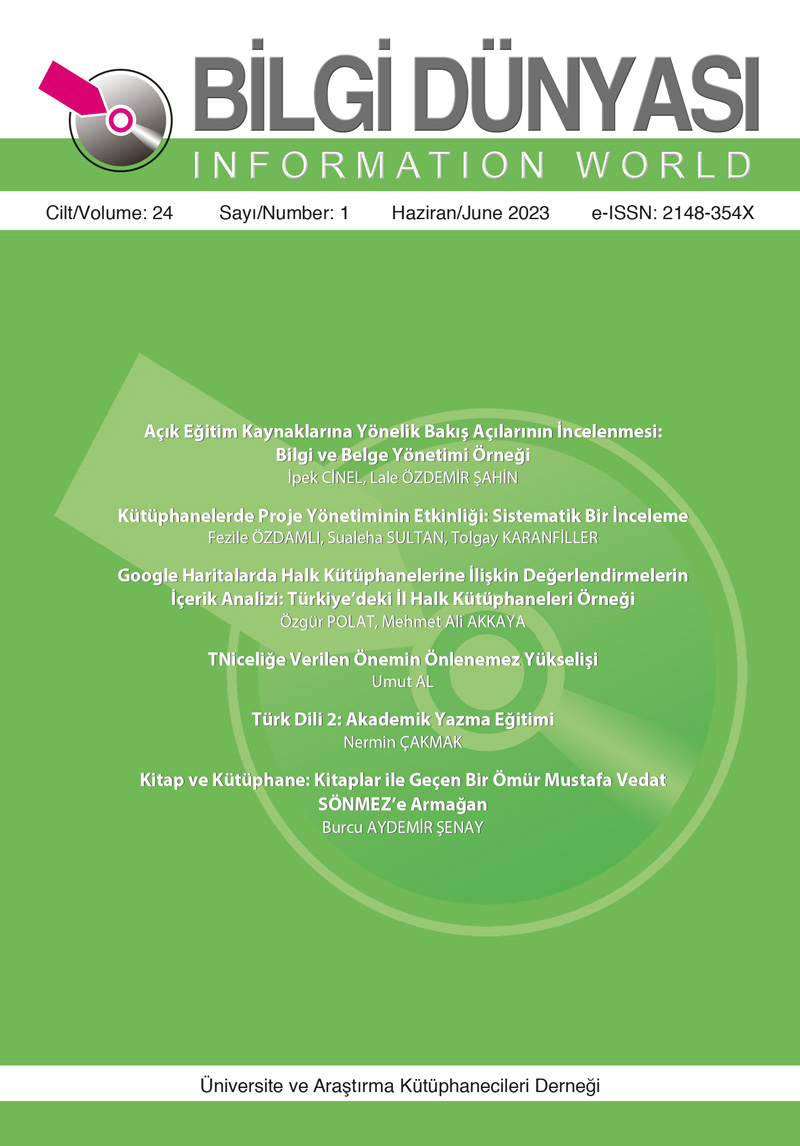
Digital transformation has had significant effects on higher education as well as many other fields. Especially with the Coronavirus (COVID-19) pandemic, the importance of digital transformation in higher education has been understood, and in this context, the roles of lecturers in the digital transformation process have emerged. On the other hand, it is seen that the studies and initiatives for the Open Educational Resources (OER) movement, which is an important part of the digital transformation in higher education and supports the philosophy of equal access to information and education for everyone, are limited in our country. This study has been prepared based on the attitudes of the academics working in Information and Records Management departments, which is one of the pioneering fields in spreading the philosophy of openness in our country, towards open education resources. The questionnaire technique was used in the data collection process of the study. The questionnaire was sent to the academics working in the Information and Records Management departments of 13 universities via e-mail. After the application of the questionnaire, the results and recommendations of the research were presented. As a result of the research, it has been determined that the attitudes of the teaching staff working in the field of Information and Records Management towards open educational resources are generally positive.
Keywords: Open educational resources, open courseware, open access, open science, Coronavirus
References
- Al, U. ve Madran, O. (2013). Açık ders malzemelerine genel bakış: Türkiye Bilimler Akademisi örneği. Bilgi Dünyası, 14(1), 1-16.
- Ankara Üniversitesi Açık Ders Malzemeleri. (2022). Ankara Üniversitesi. https://acikders.ankara.edu.tr/
- Baysal, A. Ş., Çakır, H. ve Toplu, M. (2015). Açık eğitim kaynaklarının gelişimi ve Türkiye’de uygulama alanları. Türk Kütüphaneciliği, 29(3), 461-498.
- Bozkurt, A. (2019). Açık eğitsel kaynaklardan açık eğitsel uygulamalara: Türk yükseköğretimi bağlamında ekolojik bakış açısıyla bir değerlendirme. Açıköğretim Uygulamaları ve Araştırmaları Dergisi, 5(3), 127-150.
- Bulut, B., Çelik, S., Gürdal, G., Holt, İ., Kafalı Can, G., Madran, O. ve Tonta, Y. (2020). Türkiye’de açık erişim ve açık bilim. Akademik Yayıncılık, Açık Bilim ve Kütüphane(ci)ler Sempozyumu 1-2 Ekim 2020 içinde (ss.1-13). İzmir: Yaşar Üniversitesi.
- Caswell, T., Henson, S., Jensen, M. ve Wiley, D. (2008). Open content and open educational resources: Enabling universal education. The International Review of Research in Open and Distributed Learning, 9(1). https://doi.org/10.19173/irrodl.v9i1.469
- Çukadar, S. ve Çelik, S. (2003). İnternete dayalı uzaktan öğretim ve üniversite kütüphaneleri. Doğuş Üniversitesi Dergisi, 4(1), 31-42.
- Ergüney, M. (2015). Uzaktan eğitimin geleceği: MOOC (Massive Open Online Course). Eğitim ve Öğretim Araştırmaları Dergisi, 4(4), 15-22.
- Kır, Ş. (2020). Dijital dönüşüm sürecinde yükseköğretim kurumları ve öğretim elemanlarının gelişen rolleri. Açıköğretim Uygulamaları ve Araştırmaları Dergisi, 6(3), 143-163.
- Koohang, A. ve Harman, K. (2007). Advancing sustainability of open educational resources. Issues in Informing Science and Information Technology, 4, 535-544.
- Kubuş, O., Arı, F., Çağıltay, K., Gürbüz, T. ve Akteke Öztürk, B. (2008). ODTÜ açık ders malzemeleri projesi çalışmaları. II. Uluslararası Bilgisayar ve Öğretim Teknolojileri Sempozyumu. Aydın.
- Kurşun, E. ve Çağıltay, K. (2008). Açık ders kaynaklarının faydaları, uygulanması sırasında karşılaşılabilecek engeller ve çözüm önerileri üzerine bir ön çalışma. Akademik Bilişim 2008 30 Ocak – 1 Şubat 2008 içinde (ss. 311-314). Çanakkale: Çanakkale OnSekiz Mart Üniversitesi.
- METU OpenCourseWare. (2023). Middle East Technical University. https://ocw.metu.edu.tr/
- Open Michigan. (2022). University of Michigan. https://open.umich.edu/
- Open Yale Courses. (2023). Yale University. https://oyc.yale.edu/about
- Özkul, A. E. (2007). Açık eğitim kaynakları girişimi ve ulusal açık ders malzemeleri konsorsiyumu. XIII. Türkiye’de İnternet Konferansı, Ankara.
- Tisoglu, S., Kursun, E. ve Cagiltay, K. (2020). Open educational resources in Turkey. R. Huang, D. Liu, A. Tlili, Y. Gao ve R. Koper (Eds.), Current state of open educational resources in the “belt and road” countries içinde (ss. 213-235). Springer. https://doi.org/10.1007/978-981-15-3040-1_12
- Turan, İ., Şimşek, Ü. ve Aslan, H. (2015). Eğitim araştırmalarında likert ölçeği ve likert-tipi soruların kullanımı ve analizi. Sakarya Üniversitesi Eğitim Fakültesi Dergisi, 30, 186-203.
- TU Delft OpenCourseWare. (2023). Delft University of Technology. https://ocw.tudelft.nl/
- Türkiye Bilimler Akademisi. (2011). TÜBA açık ders malzemeleri projesi 2006-2011. https://acikders.org.tr/dokumanlar/acikders_proje_tanitim_06-11.pdf
License
Copyright (c) 2023 The author(s). This is an open access article distributed under the Creative Commons Attribution License (CC BY), which permits unrestricted use, distribution, and reproduction in any medium or format, provided the original work is properly cited.