

Öz
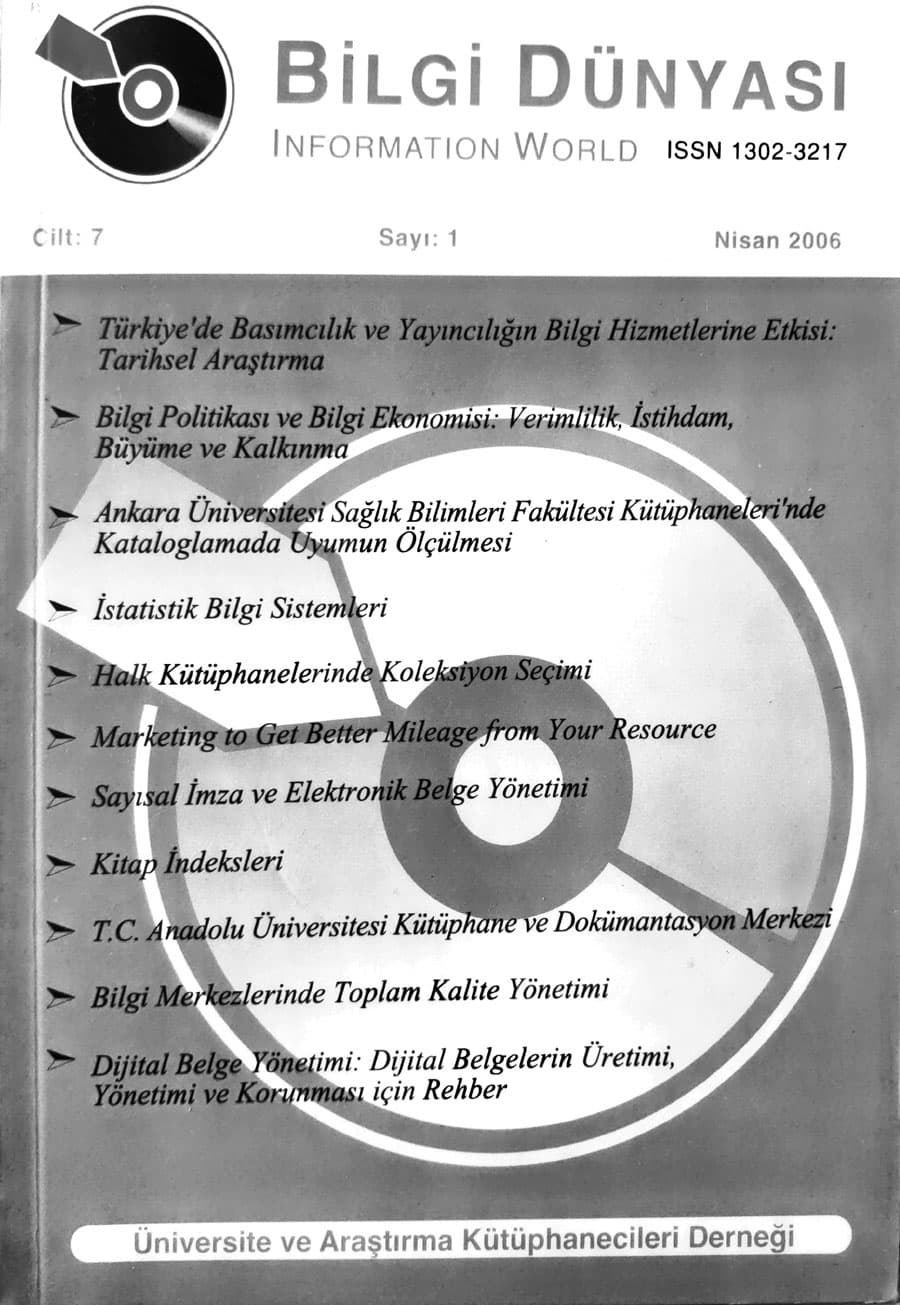
Bilgi ekonomisi küresel ekonominin temel dinamiği haline geldi. Verimliliği artırmak, nitelikli istihdam yaratmak, istikrarlı büyüme sağlamak, ulusal rekabet avantajı elde etmek ve kalkınmayı sürdürülebilir kılmak, bilgi ve iletişim teknolojilerini kullanmaktan ve bilgi ekonomisini yerleştirmekten geçiyor. Bunun için de köklü bir ulusal bilgi politikası geliştirmek gerekiyor. Türkiye bir süredir hayati bir yol ayrımında bulunuyor. Merkeziyetçi yönetim mirasına saplanmanın bizi soktuğu yönetsel çıkmazda, küresel paradigma dönüşümünü atlamak ve bilgi dolaşımından dışlanmak gibi bir tehlikeyle karşı karşıyayız. Türkiye'nin sürdürülebilir bir kalkınma ivmesi yaratması, ekonomi, siyaset, sosyal mekanizmalar ve kültürü entegre eden, bilgi ekonomisine ve bilgi toplumuna geçişi hedefleyen ulusal politikalar geliştirilmesine bağlıdır. Bu politikaların eksenini ise “ulusal bilgi politikası”nın geliştirilmesioluşturmaktadır. Bunun için, sosyo-ekonomik hayatın örgütlü kesimlerinin ve siyasi iktidarın, bu politikaların üretileceği bir yönetişim platformu yaratıp ulusal iradeyi harekete geçirmesi gerekmektedir. Ulusal fayda, bilgiyi üretmek, işlemek, paylaşmak ve yönetmekten, yani küresel oyuncu olmaktan geçer. Bu bir “ulusal seferberlik” konusudur. Rekabet avantajı yaratarak küresel ekonomiden optimal faydayı sağlayacak, dengeli büyümeyi ve kalkınmayı sürdürülebilir kılacak politika ve eylem planlarını üzerinde temellendireceğimiz bir “ulusal bilgi politikası”na ihtiyacımız var.
Anahtar Kelimeler: Bilgi politikası, Bilgi ekonomisi, Bilgi toplumu, Verimlilik, İstihdam, Büyüme, Gelişme-Türkiye
Referanslar
- Andersson, T. (2001). Changing patterns and determinants of growth. CESifo Forum, S: 3/2001.
- Arundel, A. ve Hollanders, H. (2005). Innovation strengths and weaknesses. 8 Mart 2006 tarihinde http://trendchart.cordis.lu/scoreboards/scoreboard2005/pdf/EIS%202005%20Innovation%20Strengths%20and%20Weaknesses.pdf adresinden erişildi.
- Boskin, M.J. ve Lau, L.J. (2000). Generalized Solow-Neutral Technical Progress and Postwar Economic Growth. (National Bureau of Economic Research Working Papers: 8023). Cambridge, MA: National Bureau of Economic Research, Inc.
- Castells, M. (1996). The rise of the network society. Malden, Mass: Blackwell Publishers.
- Comission of the European Communities. (2001, 29 Kasım). The impact of the e-economy on European enterprises: Economic analysis and policy implications. 2 Şubat 2006 tarihinde http://ec.europa.eu/enterprise/ict/policy/doc/com_2001_711_en.pdf adresinden erişildi.
- Comission of the European Communities. (2005). Proposal for a decision of the European Parliament and of the Council: Establishing a competitiveness and innovation framework programme (2007-2013). 6 Mart 2006 tarihinde http://ec.europa.eu/enterprise/enterprisepolicy/cip/docs/com121_en.pdf adresinden erişildi.
- Commission of the European Communities. (2002). Information society jobs- quality for change: Exploiting the information society’s contribution to managing change and enhancing quality in employment. (Commision Staff Working Paper: SEC (2002) 372). 12 Şubat 2006 tarihinde http://ec.europa.eu/employment_social/knowledge_society/docs/quality_en.pdf adresinden erişildi.
- Commission of the European Communities. (2003). Building the knowledge society: Social and human capital interactions. (Commission Staff Working Paper: SEC (2003) 652). Luxembourg: Office for Official Publications of the European Communities.
- Commission of the European Communities. (2004). Communication from the Commission to the Council, The European Parliament, the European Economic and Social Committee and the Committee of the Regions: Challenges for the European Information Society beyond 2005. (COM (2004) 757 Final). 8 Mart 2006 tarihinde http://europa.eu.int/information_society/eeurope/2005/doc/all_about/new_chall_en_adopted.pdf adresinden erişildi.
- European Commission. (2000). Strategies for jobs in the information society. Luxembourg: Office for Official Publications of the European Communities.
- European Commission. (2001, 1-2 March). The e-Economy in Europe: Its potential impact on EU enterprises and policies. e-Economy Conference Final Report. 18 Şubat 2006 tarihinde http://ec.europa.eu/enterprise/events/e-conomy/doc/e_economy_report.pdf adresinden erişildi.
- European Trend Chart on Innovation. (2005, 20 May). Methodology report on European innovation scoreboard 2005. 9 Mart 2006 tarihinde http://trendchart.cordis.lu/scoreboards/scoreboard2005/pdf/EIS%202005%20Methodology%20Report.pdf adresinden erişildi.
- Guellec, D. (1999). L’Économie de l’innovation. Paris: Découverte.
- International Labour Office. (2001). World employment report 2001: Life at work in the information economy. Geneva: ILO.
- Lehr, B. ve Lichtenberg, F. (1999). Information technology and its impact on productivity: Firm-level evidence from government and private data sources, 1977-1993. Canadian Journal of Economics, 32 (2), 335-362.
- Lopez-Bassols, V. (2002, 17 July). ICT skills and employment. (STI Working Papers: DSTI/DOC (2002) 10. 17 Şubat 2006 tarihinde http://www.olis.oecd.org/olis/2002doc.nsf/43bb6130e5e86e5fc12569fa005d004c/db2bda9e479dbf9ac1256bf90055744f/$FILE/JT00129725.PDF adresinden erişildi.
- Nordhaus, W.D. (2001, January). Productivity growth and the new economy. (NBER Working Paper: 8096). 23 Mart 2006 tarihinde http://www.nber.org/papers/W8096 adresinden erişildi.
- Organisation for Economic Co-operation and Development. (2001). The new economy: Beyond the hype / final report on the OECD growth project. Meeting of the OECD Council at Ministerial Level 2001. Paris: OECD.
- Organisation for Economic Co-operation and Development. (2003). Seizing the benefits of ICT in a digital economy. Meeting of OECD Council at Ministerial Level. Paris: OECD.
- Shapiro, C. ve Varian. H.R. (1999). Information rules: A strategic guide to the network economy. Boston, Mass.: Harvard Business School Press.
- Touraine, A. (2005, 24 Nisan). Alain Touraine söyleşisi. Radikal Gazetesi. 24 Nisan 2006 tarihinde http://www.radikal.com.tr/haber.php?haberno=150650 adresinden erişildi.
- Türkiye İktisat Kongresi. (2004). Bilgi ekonomisine ve bilgi toplumuna geçiş çalışma grubu raporu, 2004. (Türkiye İktisat Kongresi Raporları-III, Cilt 13, DPT Yayınları). 17 Mart 2006 tarihinde http://ekutup.dpt.gov.tr/ekonomi/tik2004/cilt13.pdf adresinden erişilmiştir.
- Türkiye İşveren Sendikaları Konfederasyonu. (2006). Yenilikçilik endeksinde Türkiye sonuncu. 7 Şubat 2006 tarihinde http://www.tisk.org.tr/duyurular.asp?ayrinti=True&id=1689 adresinden erişilmiştir.
- Qiang, C.Z.W, Pitt, A. ve Ayers, S. (2004). Contribution of information and communication technologies to growth. (World Bank Working Paper: 24). Washington, DC: World Bank.
Lisans
Telif Hakkı (c) 2006 Yazar(lar). Açık erişimli bu makale, orijinal çalışmaya uygun şekilde atıfta bulunulması koşuluyla, herhangi bir ortamda veya formatta sınırsız kullanım, dağıtım ve çoğaltmaya izin veren Creative Commons Attribution License (CC BY) altında dağıtılmıştır.