Abstract
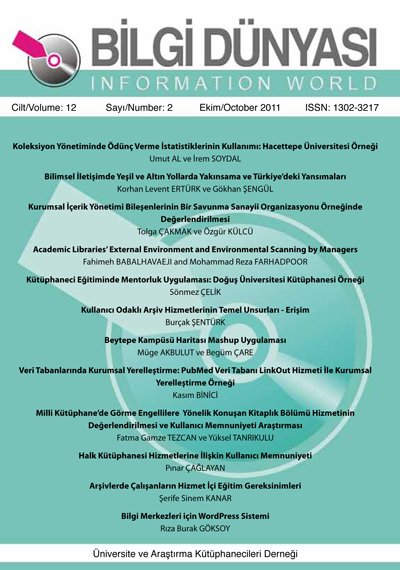
Organizations tend to integrate the systems, such as document, records, web content and e-mail management that they develop for various purposes under enterprise content management. In this respect, the aim of this study is to analyze the current conditions and expectations of a defense industry organization in Turkey. According to this aim, the document management systems, electronic mail systems, Web content management applications used by the employees while running their day-to-day activities and the document/records systems used for official correspondence in 167 departments by 337 users within an organization specialized in defense industry in Turkey have been analyzed with a web based survey. Results show that the electronic mail management systems in the related organization are at a higher level than the other systems, and records management systems should be developed more than other analyzed systems. Implementation of an enterprise content management system and increasing the awareness of employees about enterprise content management are also recommended by the authors.
Keywords: Content management, Enterprise content management, Enterprise content management components, Defense industry, Turkey
References
- AIIM. (2009). 22 Temmuz, 2009 tarihinde from http://www.aiim.org/aboutaiim/ecm-erm-bpm association.aspx adresinden erişildi.
- AIIM. (2011). about aIIm. 25 Şubat 2011 tarihinde http://www.aiim.org/About adresinden erişildi.
- AIIM Europe ve AIIM International. (2007). Ecm roadmap. 10 Ağustos 2009 tarihinde http://www.aiim.org.uk/publications/roadmap/poster_content.asp adresinden erişildi.
- Alsup, M. (2004). ECM – The new rationale. aIIm E-Doc magazine, march/april. 17 Kasım 2010 tarihinde http://www.gimmal.com/Publications/Documents/ECM_The_New_Rationale.pdf adresinden erişildi.
- Broadbent, R. E. (2009). a Functional framework for content management. Yayımlanmamış Yüksek Lisans Tezi, Utah: Brigham Young University.
- Chieu, T.C., Zeng, L. ve Mohindra, A. (2008). An extensible enterprise content management system with service component architecture. IEEE International conference on Service Operations and logistics and Informatics içinde (ss. 1131-1137). Pekin: IEEE.
- Content Management. (2009). 12 Eylül 2009 tarihinde http://en.wikipedia.org/wiki/Content_management adresinden erişildi.
- Content Management-junction (2011). about enterprise content management, its purpose, need & benefits. 23 Şubat 2011 tarihinde http://www.content-management-junction.com/enterprisecm.html adresinden erişildi.
- Çakmak, T. (2011). kurumsal içerik yönetimi kapsamında bilgi ve belge sistemlerinin bir kurum örneğinde değerlendirilmesi. Yayınlanmamış yüksek lisans tezi, Hacettepe Üniversitesi, Ankara.
- Dilnutt, R. (2006). Surviving the information explosion. IEE Engineering management, 16(1), 39-41.
- Enterprise Content Management. (2009). Wikipedia web sitesinden 12 Ağustos 2009 tarihinde http://en.wikipedia.org/wiki/Enterprise_content_management adresinden erişildi.
- Gupta, V. K., Govindarajan, S. ve Johnson, T. (2001). Overview of content management approaches and strategies. Electronic markets 11(4), 281 – 288.
- Jenkins, T., Köhler, W. ve Shackleton, J. (2005). Enterprise content management methods: what you need to know?. Kanada: Open Text Corporation.
- Kampffmeyer, U. (2006). Ecm-enterprise content management. Project Consult: Hamburg. 7 Kasım 2009 tarihinde http://www.projectconsult.net/Files/ECM_White%20Paper_kff_2006.pdf adresinden erişildi.
- McNay, H. E. (2002). Enterprise content management: an overview. Professional communication conference, 2002. IPcc 2002. Proceedings. IEEE International içinde (ss. 396-402). Portland: IEEE.
- Mescan, S. (2004). Why content management should be part of every organisation’s global strategy. The Information management Journal, July/august, 54-57.
- Nakano, R. (2002). Web content management: a collaborative approach. Boston: Addison-Wesley.
- National Archives and Records Service of South Africa. (2006). managing electronic records in governmental bodies: policy, principles and requirements. Pretoria: National Archives and Records Service of South Africa.
- O’Callaghan, R. ve Smits, M. (2005). A Strategy Development Process for Enterprise Content Management. ECIS 2005 Proceedings. 24 Mart 2010 tarihinde http://is2.lse.ac.uk/asp/aspecis/20050110.pdf adresinden erişildi.
- Oxford Dictionary. (2011). content. 12 Mart 2011 tarihinde http://oxforddictionaries.com/view/entry/m_en_gb0174940?rskey=sRKZ7T&result=2#m_en_gb0174940 adresinden erişildi.
- Ozan, Ö. (2009). CMS, LMS, LCMS kavramları. akademik Bilişim’09 - XI. akademik Bilişim konferansı bildirileri içinde (ss.171-176). Şanlıurfa: Harran Üniversitesi.
- Paivarinta, T. ve Munkvold, B. E. (2005). Enterprise content management: an integrated perspective on information management. Proceedings of the Thirty-Eighth Hawaii International conference on System Sciences (HIcSS-38) içinde (ss.1-10). Hawaii: IEEE Computer Society Press.
- Reimer, J.A. (2002). Enterprise content management. Datenbanken Spektrum, 2 (4), 17-35.
- Shegda, K.M., Bell, T., Chin, K. ve Gilbert, M.R. (2007). Magic quadrant for enterprise content management. Gartner Inc.
- Smith, H. A. ve McKeen, J. D. (2003). Developments in practice: enterprise content management. communications of aIS, 11, 647-659.
- Sprehe, J. T. (2005). The positive benefits of electronic records management in the context of enterprise content management. Government Information Quarterly, 22(2), 297–303.
- Stephens, D. O. ve Wallace, R.C. (2003). Electronic records retention: new strategies for data life cycle management, Lenexa: ARMA International.
- Türk Dil Kurumu. (2005). Türkçe sözlük (3.bs.). Ankara: Türk Dil Kurumu.
- Tyrväinen, P., Salminen, A., ve Päivärinta, T. (2003). Introduction to the enterprise content management minitrack. Proceedings of the 36th Hawaii International conference on Systems Sciences içinde. Hawaii: IEEE Computer Society Press.
- Tyrväinen, P., Päivärinta, T., Salminen, A. ve Iivari, J. (2006). Characterizing the evolving research on enterprise content management. European Journal of Information Systems, 15(6), 627-634.
- UCDAVIS. (2009a). Web content management initiative. 18 Eylül 2009 tarihinde http://cms.ucdavis.edu/aboutcms.shtml adresinden erişildi.
- Vural, Z. B. A. (2005). kurum kültürü ve örgütsel iletişim (Gnşl. bs.). İstanbul: İletişim.
- Wilkoff, N., Walker, J., Root, N. ve Dalton, J. (2001). What’s next for content management? Cambridge: Forrester Research Inc. 26 Şubat 2010 tarihinde http://www.forrester.com/ER/Research/TechInsight/Excerpt/0,4109,13920,00.html adresinden erişildi.
License
Copyright (c) 2011 The author(s). This is an open access article distributed under the Creative Commons Attribution License (CC BY), which permits unrestricted use, distribution, and reproduction in any medium or format, provided the original work is properly cited.