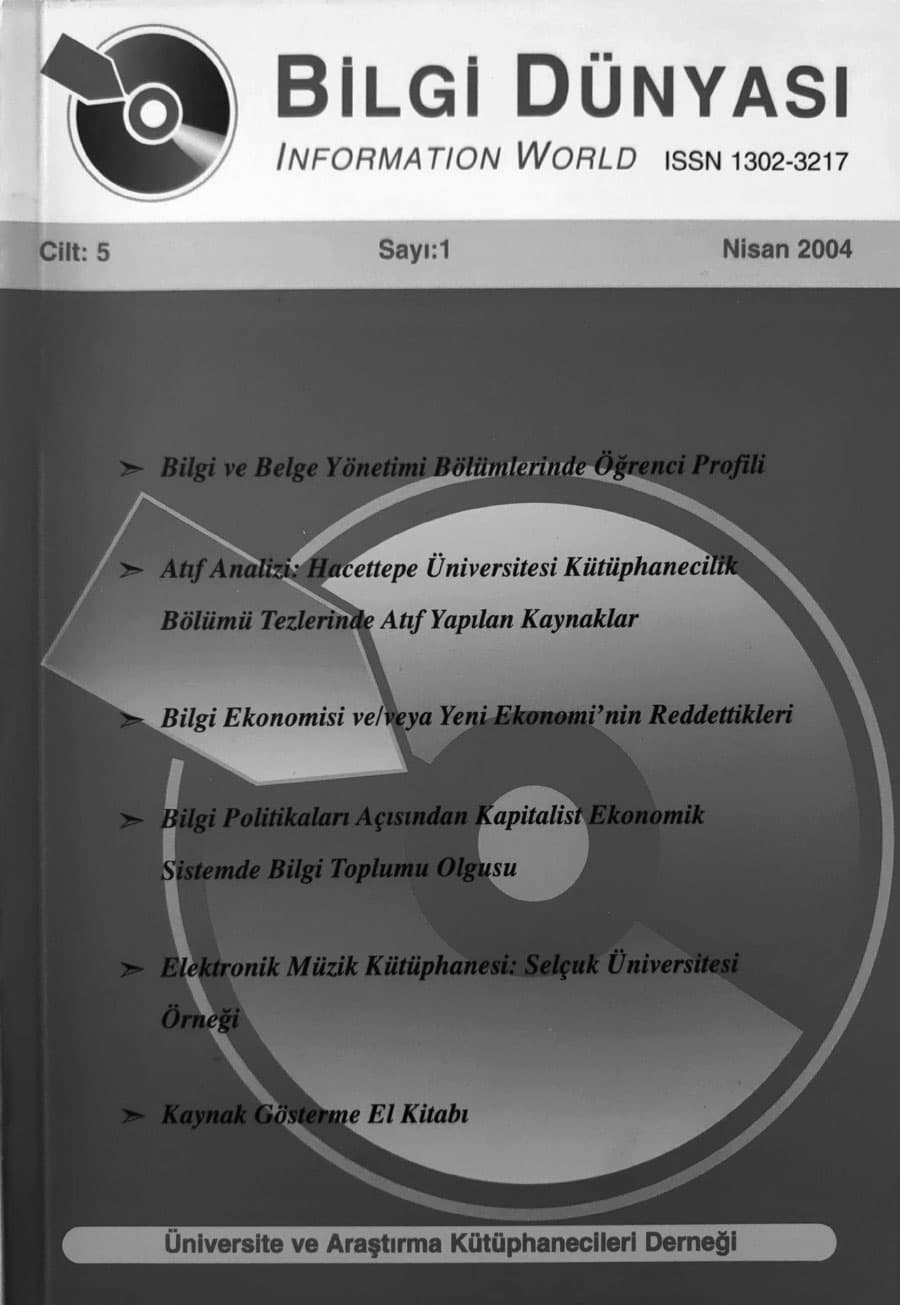
Abstract
The techno-economic transformation currently experienced has led to definea well-known value on the level of today’s comprehension as a new fact, of which we were aware of its potential, believed in its necessity, yet due to our insufficient comprehension could not so far utilise it extensively. Knowledge and/or information, in addition to their contributions to technology output have profoundly changed both the processes of our daily lives and those in business world. Actually, what makes economy knowledge-based depends on how we comprehend knowledge and/or information. In this study, the issue of knowledge and/or information economy is taken under consideration with special emphasis upon its rejections. In this realm techno-economic transformation, anticipations concerning dimensions of transformation, the evaluation of all related challenges and opportunities of the knowledge economy were discussed. Knowledge economy is a product of transformation. Therefore, the opportunities and challenges embedded in choices should be defined rationally. The study also calls for intellectual effort on deciding upon choices for knowledge-based economy goals in real life.
Keywords: Knowledge economy, Knowledge management, Information management
References
- Baily, M. N. ve Gordon, R. J. (1988). The productivity slowdown, measurement issues, and the explosion of computer power. Brookings Papers on Economic Activity, (2), 347-420. 30 Nisan 2004 tarihinde http://proquest.umi.com/pqdweb adresinden erişildi.
- Berger, R. (2000). New economy: Opportunities for Europe.
- Berndt, E. R. ve Morrison, J. C. (1995). High-tech capital formation and economic performance in U.S. manufacturing industries: An exploratory analysis. Journal of Econometrics, 65, 9-43.
- Bontis, N. (2002). The rising star of the chief knowledge officer. Ivey Business Journal, 66 (4), 20-25. 21 Mart 2002 tarihinde http://proquest.umi.com/pqdweb adresinden erişildi.
- Cohen, D. ve L. Prusak. (2001). Kavrayamadığımız zenginlik: Kuruluşların sosyal sermayesi (A. Kardam, Çev.). İstanbul: MESS.
- Cooke, P. (2001). New economy innovation systems: Biotechnology in Europe and the USA. Industry and Innovation, 8 (3), 267-289. 21 Mart 2002 tarihinde http://proquest.umi.com/pqdweb adresinden erişildi.
- Dahlman, C. J. (2001). Updating the economic incentive and institutional regime for the knowledge economy. Development OUTREACH, 3 (3), 6-8.
- Dahlman, C. J. ve Andersson, T. (Ed.). (2000). Korea and the knowledge based economy: Making the transition. Washington, DC: World Bank.
- Davenport, T. ve L. Prusak. (1998). İş dünyasında bilgi yönetimi. İstanbul: Rota.
- Drucker, P. F. (1993a). Post-capitalist society. London: Butterworth Heinemann.
- Drucker, P. F. (1993b). Yeni gerçekler: Devlet ve politika alanında; ekonomi bilimi ve iş dünyasında; toplumda ve dünya görüşünde (B. Karanakçı, Çev.). Ankara: Türkiye İş Bankası.
- Gürdal, O. (2000). Tekstil endüstrisinde enformasyon olgusu. Ankara: Türk Kütüphaneciler Derneği.
- Kanjanasupak, L. (2002). Sizing up the new economy. Nations, Access Number: 2W80046735848. 22 Mart 2002 tarihinde http://web11.epnet.com adresinden erişildi.
- Kerfoot, K. (2002). The leader as chief knowledge officer. Nursing Economics, 20 (1), 40-42. 21 Mart 2002 tarihinde http://proquest.umi.com/pqdweb adresinden erişildi.
- Konfüçyüs. (1973). Konuşmalar: Lun-yü (M. N. Özerdim, Çev.). Ankara: Başbakanlık Kültür Müsteşarlığı.
- Krogh, G., Ichijo, K. ve Nonaka, I. (2002). Bilginin üretimi. [İstanbul]: Dışbank.
- Martin, R. (2001). The new economy. South Australia: Information Economy Policy Office.
- Organisation for Economic Cooperation and Development. (1996a). The knowledge-based economy. 2 Şubat 2002 tarihinde http://www.oecd.org/dataoecd/51/8/1913021.pdf; http://members.shaw.ca/competitivenessofnations/Anno%20OECD4.htm adresinden erişildi.
- Organisation for Economic Cooperation and Development. (1996b). Transitions to learning economies and societies. Paris: OECD.
- Oğuz, Ş. (2001) Bilgi konseyini kuralım. Habertürk, 22 Kasım 2003 tarihinde http://turk.internet.com/haber adresinden erişildi.
- Porat, M. U. (1977). The information economy: Definition and measurement. Washington, DC: US Department of Commerce Office of Telecommunication.
- Rayward, W. B. (1983). Librarianship and information research: Together or apart. (F. Machlup ve U. Mansfield, Ed.). The study of information: Interdisciplinary messages içinde (ss. 399-405). New York: John Wiley and Sons.
- Saygılı, Ş. (2003). Bilgi ekonomisine geçiş sürecinde Türkiye ekonomisinin dünyadaki konumu. Ankara: Devlet Planlama Teşkilatı.
- Tiwana, A. (2003). Bilginin yönetimi. [İstanbul]: Dışbank.
- Türkiye Sanayicileri ve İş Adamları Derneği. (2001). Avrupa Birliği yolunda bilgi toplumu ve e-Türkiye. İstanbul: TÜSİAD.
- Vakıf Risk Sermayesi Yatırım Ortaklığı. Risk sermayesi nedir? 5 Aralık 2003 tarihinde http://www.Vakifrisk.com.tr/rsnedir.htm adresinden erişildi.
- Weill, P. ve Broadbent, M. (1999). Enformasyon altyapısı: Şirketler için yeni bir kaldıraç (A. G. Ünal, Çev.). İstanbul: Boyner Yayıncılık.
- Zhang, S. (2001). Human capacity building for the new economy. Development OUTREACH, 3 (3), 9-12.
License
Copyright (c) 2004 The author(s). This is an open access article distributed under the Creative Commons Attribution License (CC BY), which permits unrestricted use, distribution, and reproduction in any medium or format, provided the original work is properly cited.